
If you notice an item missing after an Umrah taxi journey, identify the ride and report it through the provider’s private booking channel. A clear report gives the team something specific to investigate: which vehicle journey, what item, where you last saw it and how you can now be contacted.
Do not begin by arranging another ride to chase the vehicle. Establish whether the item has been found and agree the collection or return process first. This guide focuses on belongings possibly left in a private transfer, including the handover if an item is located. Airport, airline, hotel and railway lost-property services are separate.
Check the immediate handover before assuming the item stayed in the car
Ask your group to check the bags and possessions it has just carried into the hotel or terminal. A small bag may have been taken by another family member, placed on a luggage trolley or handed to reception. Keep this check brief and specific rather than unpacking everybody’s luggage without a reason.
Identify the last moment you remember having the item. Was it on your lap during the journey, beside you when the car stopped or with the cases after unloading? That distinction helps you report the right possibility. “Possibly left on the rear seat” is more useful and accurate than asserting that the driver must have it.
If you are still beside the vehicle, ask the driver about checking the seating area while it is safe and practical. Do not reach into a moving car or step into traffic to stop it leaving. If it has departed, use the booking contact rather than creating a dangerous or confusing roadside interaction.
For a missing suitcase, check the unloading count with the person responsible for the group bags. Compare what travelled in the boot with what the party has now. A missing small possession and a case that was never unloaded need different descriptions, even when they concern the same journey.
Identify the private journey precisely
Find the booking reference and the actual date, pickup and destination. A multi-leg Umrah trip may use several different vehicles. A report saying “our Makkah taxi” could concern an airport arrival, a hotel move or an intercity journey. Give the team the particular record you want checked.
Include the traveller’s name as shown on that booking and the person who was in contact during the ride. If an organiser booked from overseas, identify both roles. The provider may need to connect the reporting person with the existing record before discussing a potentially found item.
Use the current journey details rather than an old itinerary screenshot if the booking changed. A revised pickup or destination can make the earlier summary misleading. The guide to journey confirmations and payment records helps distinguish the transport record from evidence of a payment alone.
If you travelled with a different provider, contact that provider through its verified booking details. Pilgrim Taxi cannot identify every car used during your holiday from a description of its colour. Do not send personal documents to several unrelated operators in the hope that one recognises the journey.
Write an identifying description without publishing private contents
Describe the type, colour, approximate size and a distinguishing feature of the item. A plain description might identify a dark shoulder bag with a striped strap, a phone in a particular case or a child’s pouch with a small attached key ring. Include where it may have been left in the vehicle.
Keep one or two non-public identifying details for ownership checks. If a bag is located, the team may ask a question about its contents or another feature. Do not publish a complete list of valuables, document numbers or device details in an open social media post.
A photograph of the outside of the item can help if you already have one. Send it privately and remove unrelated personal information visible around it where practical. A photo of a bag is different from a photo of a passport, payment card or account screen stored inside that bag.
Explain whether the item is one object or a container holding other belongings. For example, reporting a pouch and a separately missing phone may create two searches if the phone is actually inside the pouch. Keep the description consistent so the provider can match what it finds with your report.
Send one concise initial report
Your first message can follow this structure: “Booking reference: [reference]. Journey: [date, pickup and destination]. Item: [description]. Last seen: [place or moment]. Current contact: [working number]. Please check whether it has been found and tell me the process for a verified handover.” Replace the brackets with actual information.
Add your departure constraint if it affects collection, such as leaving the city later that day. This helps the team understand the practical situation, but it is not a request to guarantee a return before a flight. Avoid sending a series of urgent messages that omit the journey reference.
Tell the team if the number used for the booking is no longer available. A missing phone may also be the phone that was used for driver messages. Provide a working alternate contact and identify whose number it is. The pickup phone-number guide explains why a usable contact matters more than a familiar number that nobody can answer.
Record when and where you submitted the report. If you later need to follow up, refer to that report rather than starting a new account with different details. One accurate thread makes it easier to understand what has been checked and which response is current.
If the missing item is your phone
Arrange a working communication method first. Use an agreed companion’s number or another contact you can access, and tell the booking team how to reach you. The lost phone should not remain the only channel for updates about its own recovery or your next transfer.
Apple provides official guidance for finding a lost iPhone or iPad, and Google provides guidance for finding or securing an Android device. Use the current instructions for your device and account. Availability depends on its setup and connection; a location display is not confirmation that a particular driver has it.
Apple also warns against sharing passcodes, passwords or verification codes with people claiming to help recover a device. Keep ownership verification for the item separate from access to your account. A transport team does not need your device unlock code simply to discuss whether a phone matching your description was found.
If you use a companion’s device to access your own account, follow the manufacturer’s appropriate process and keep your credentials private. Do not ask a driver or hotel employee to operate your personal account. After reporting the missing phone, maintain the alternate contact until the recovery outcome is known.
If the item contains travel documents or payment cards
State privately that the missing item contains an essential travel document or payment card, without attaching images of those documents to an open message. Follow the issuing authority’s or bank’s official instructions for the document or card concerned. A transport investigation does not replace those separate processes.
Tell the organiser that the item may affect the next journey. A confirmed airport transfer cannot resolve a problem with the documents needed for onward travel. Establish the actual situation with the relevant authority or airline rather than assuming that finding a photocopy is enough to continue as planned.
Keep the recovery report factual. A passport in a missing pouch may still be with reception or another traveller. Describe the last known location and the steps taken so far. Avoid accusing a person of taking it based only on the fact that you cannot currently find it.
If a bank or authority requires a separate reference, keep it alongside your own incident note. Share only what is necessary with the transport provider. The provider’s role is investigating the possible item left in its vehicle and agreeing an appropriate handover if it is found.
Understand what a found-item response does and does not mean
A message that an item resembling yours has been located is the start of verification, not the end of the process. Ask how ownership will be checked and where the item currently is. Answer through the established private channel rather than responding to an unrelated person who contacts you publicly.
Confirm whether the whole item and its reported contents have been identified. A phone case, bag or pouch can look similar to another traveller’s possession. Supply the identifying detail requested by the team without offering unnecessary sensitive information or account access.
Next, ask about the actual collection or return options, any charge that would apply and who can authorise the handover. Do not assume that the vehicle can interrupt another booking, that a driver is still nearby or that an item can be delivered across cities for no charge.
Keep the provider’s answer clear in your record. “Found; collection arrangement pending” differs from “handover agreed for this location.” Tell relatives the correct status so nobody sets off to collect an item on the strength of an incomplete message.
Agree a collector if the owner cannot return
You may be travelling onward while a family member remains in the city. Ask the provider whether another person can collect and what authorisation it requires. Do not simply send someone with your booking screenshot and assume that this is sufficient to release the belongings.
Name the proposed collector privately and agree the verification process before the person moves. Confirm the collector’s working number and the location and time that the provider has accepted. Keep the owner’s consent visible in the established conversation.
If a hotel employee may receive the item, ask the hotel and provider separately whether they can accept that arrangement. Specify whose booking and room stay the delivery concerns through a private channel. An unnamed reception desk is not the same as an agreed person taking responsibility for a valuable item.
The guide to organiser and traveller contacts is useful when the owner, booking organiser and proposed collector are different people. For lost property, add the agreed collector role rather than assuming the existing booking contact can authorise every handover.
Protect the rest of your itinerary while recovery is pending
List the journeys that still need to happen and identify which one is genuinely affected by the missing item. Losing a non-essential bag does not automatically change a flight or hotel checkout. Conversely, a missing essential document can affect the ability to travel even if the car itself is ready.
Separate a possible collection journey from the already booked airport transfer. Ask whether collection can be arranged independently or whether a confirmed change is needed. Do not tell the airport driver to make an unplanned detour and expect the original timing and fare to cover it.
If the handover cannot be completed before you leave, discuss available options rather than making an assumption about storage or shipping. Ask how long the provider can hold the item, whether a later authorised collection is possible and what arrangements it accepts. This article does not establish a standard retention or delivery policy.
Update any affected transfer through the booking process and get the final instruction confirmed. Relatives should have one current travel plan, while the organiser maintains the separate lost-property thread. That prevents an unresolved recovery request from creating contradictory pickup instructions.
A fictional bag recovery with an onward flight
Consider a fictional family that arrives at a Madinah hotel after a private transfer and notices a small canvas bag missing. It checks the cases, trolley and reception handover. Nobody has the bag, and one traveller remembers placing it beside them on the rear seat.
The organiser reports the actual booking reference, journey date and bag description. It keeps a distinctive contents detail private for verification. Because the family’s original contact phone is working, it uses that established thread rather than posting a document photograph in a public comment.
The provider later replies that a similar bag has been located. The organiser completes the requested ownership check and asks about available handover arrangements. The family has an onward flight the following day, so it considers whether an authorised relative staying in Madinah could collect if an owner handover cannot be agreed.
The relative does not leave for collection until the provider accepts the authorisation and confirms the location. The organiser records who will collect and keeps the airport transfer unchanged unless there is a real need to amend it. No free delivery, waiting time or guaranteed recovery deadline is assumed.
After collection, the relative confirms receipt privately. The organiser closes the lost-property thread and tells the family the outcome. Its travel instruction still contains only the confirmed airport pickup, rather than a mixture of the collection discussion and the next journey.
Redirect the report if the vehicle check is negative
If the provider cannot locate the item, revisit the handovers rather than repeatedly submitting the same vehicle report. Check the terminal, hotel or other place where the belongings were last handled. Keep your account consistent while reporting the possibility to the relevant service.
Madinah Airport has its own official lost-and-found information for items found within the airport. That airport service is separate from a private vehicle report. Similarly, an item left on an aircraft or train needs the relevant operator’s process, not an assumption that the taxi team can recover it.
Tell the transport provider if another service finds the item so the earlier report can be updated. If it remains missing, ask what further information would help the vehicle investigation and maintain the agreed contact. Do not invent a conclusion about what happened when the available evidence does not establish one.
Keep a short incident note for the organiser
Write the sequence in a few dated entries: when the loss was noticed, the last known location, the report channel, the response and any agreed handover. This is especially helpful if the organiser is at home and another traveller handles the local interaction. Both people can see what has actually happened without relying on a hurried retelling.
Separate facts from possibilities. “The bag was on the seat during the drive” is a remembered observation. “It may still be in the vehicle” is a possibility to investigate. “A matching bag has been found” is a provider response. Keeping those distinctions makes follow-up messages accurate and prevents an assumption becoming the incident’s official story.
Do not put the incident note into every family travel summary. The person dealing with recovery needs its detail; the wider travelling party needs the effect on its own next step. If the confirmed transfer remains unchanged, say so. If a real booking change is required, share its accepted instruction when it is ready.
When the outcome is known, add it to the same note. That gives you a coherent record for any later query without maintaining several contradictory versions in different conversations.
After a handover, record the outcome
Check the item received and tell the provider whether it matches your report. Record the collection date, agreed collector and any actual charge or receipt. If something remains unresolved, describe that specific issue privately rather than marking the entire incident closed.
For later journeys, keep a simple unloading check: passengers leave safely, the group counts its cases and each person checks the small belongings kept beside them. The hand-luggage guide helps organise what stays with the traveller. Use that routine without treating a previous loss as a reason to blame somebody else in the group.
If recovery requires an additional journey, first agree the item handover and then use the Pilgrim Taxi ride finder to check an available leg. A new booking is transport to an agreed place; it is not a guarantee that an unverified item will be waiting there.
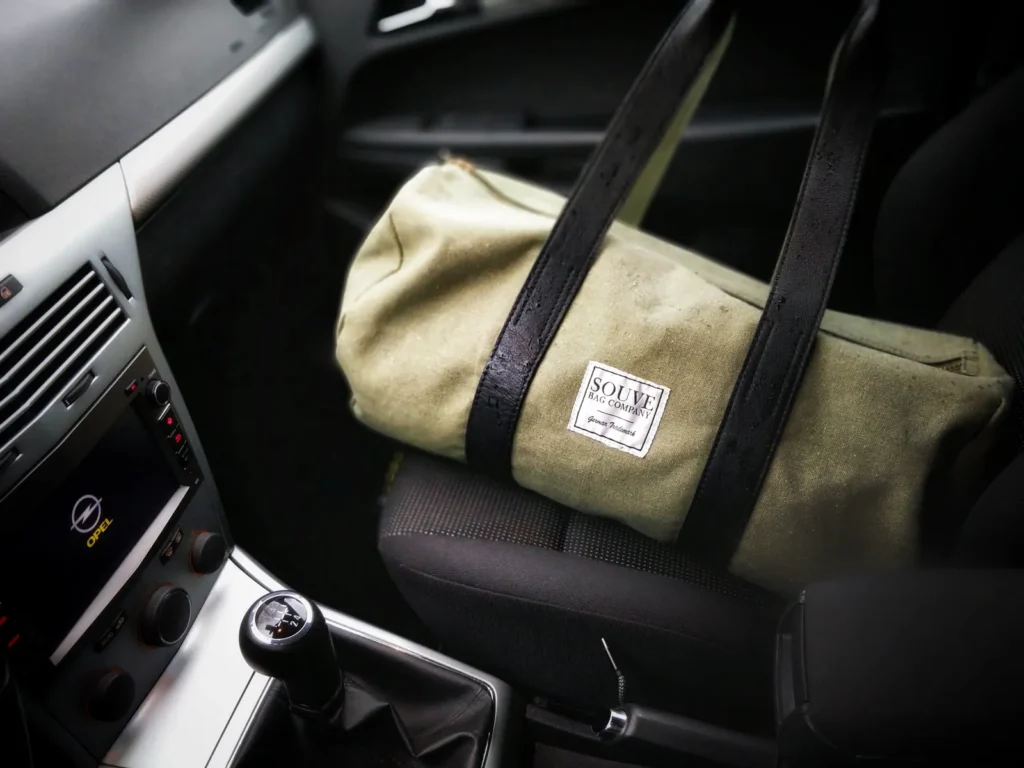
Illustrative parked-car photograph; not a lost item recovered by Pilgrim Taxi or a company vehicle. Photo by Jens Mahnke / Pexels, under the Pexels licence.