
Staying with relatives during an Umrah trip begins with an invitation, but the transport plan needs a more specific agreement. Which home will receive you, for which nights, and who will be there when you arrive? A family address can become a dependable base when the receiving household and the travelling party understand the same arrangement.
This guide is for international pilgrims accepting a private family invitation, rather than purchasing a hotel or serviced-apartment stay. It focuses on the receiving person’s availability, the confirmed home, private access and the journeys that depend on it. Staying with relatives does not establish entry or pilgrimage eligibility; check applicable official requirements separately from this practical plan.
Turn a welcoming invitation into a shared agreement
“Stay with us whenever you come” is a generous offer, but it may have been made before anyone knew the dates or travelling party. Reply with the actual people and nights you are considering. Ask the relative to confirm that the household can receive that party for that period.
Include anyone whose presence might not be obvious from an earlier conversation: a spouse, children, another parent or a relative joining later. Do not book flights assuming an invitation for one person automatically covers a larger household. Give the host an opportunity to answer comfortably and accurately.
Distinguish a family visit from using the home as the main base for the pilgrimage trip. A relative may be happy to receive you for dinner without being ready for every night of the stay. Say what you are asking for instead of allowing everyone to interpret the invitation differently.
Ask how firm the proposed dates are on both sides. If you are still comparing flights, identify the range as provisional. Once you choose, obtain a clear confirmation of the accepted nights before committing transport to that home. This is a shared family arrangement, not an assumption built around the first available fare.
Identify the receiving household, not only the relative’s name
Confirm which home the invitation concerns. A relative may have moved, be temporarily staying elsewhere or be suggesting another family member’s house. “My cousin’s place” is not a transport destination, especially if several cousins live in the same city or the organiser remembers an older address.
Ask who in that household has agreed to receive the guests. The person inviting you may be travelling too or may not be the person normally at home. A short introduction between the organiser and the actual receiving adult can settle questions without making the invited relative carry every message.
Keep decisions respectful of the household’s own commitments. Work, school, other visitors and family responsibilities may affect arrival reception or the dates offered. Ask about the practical constraints rather than treating a private home as a permanently staffed reception desk.
Use one accepted home address in the travel summary. If somebody proposes a different relative’s home later, treat it as a real change requiring the new household’s agreement. A convenient suggestion from another family member should not silently replace the arrangement the guests and first host accepted.
Obtain an address the host has checked
Ask the host for the full address, city, district and building information it uses, plus a checked map link where useful. Explain that this is for an arrival or pickup, not for publishing the family’s home online. Send those details through the private booking channel only where needed.
Saudi Post SPL’s National Address information describes building number, street, secondary number, district, postal code and city, and a short address consisting of four letters and four numbers. Ask the host to supply its existing details if available. You are obtaining a clearer destination, not registering the guests or determining their permission to stay.
Check that the supplied point represents the intended home rather than the host’s workplace, a meeting place used on a previous visit or the middle of a large development. Ask the host to look at the link it sends. The person who knows the home should verify it before a distant organiser interprets it.
Google Maps’ official sharing guidance explains sharing a map or location link. A link is useful for communication, but it does not prove that a vehicle may stop at the marked point or that somebody will be waiting there. Confirm those practical details separately.
The address and map-pin guide covers checking a place against a conflicting map location. For a private family stay, the host’s checked address replaces a commercial property confirmation as your practical source. Do not use a nearby hotel name as a substitute destination simply because it is easier to select.
Agree who receives the party on arrival
Name the adult who will receive the guests, and ask about that person’s actual availability. The welcoming relative may be at work when the flight lands. The household might arrange another adult to receive you, but that arrangement should be understood by the person concerned.
Explain the arrival sequence without promising a fixed road-arrival time. Give the flight and date, the expected city of arrival and the onward movement being considered. Airport procedures, travel conditions and a delayed flight can change when the party reaches the home.
Ask what happens if you arrive later than anticipated. Does the receiving person remain available, or should you contact somebody else? Resolve a workable alternative with the household beforehand instead of relying on the family car driver to wake an unavailable relative or find an open door.
Keep the receiver’s contact separate from the passenger contact. The traveller answers questions about the people waiting for a ride; the receiver answers questions about being received at the home. One person can perform both roles only if their actual location and availability make that possible.
Ask the receiver’s permission before sharing their number with a booking team where useful. Tell them the journey it concerns. A private family contact should not be distributed to unrelated drivers or placed in public travel comments as a general help number.
Understand the final arrival into the home
Ask about the route from the agreed drop-off place to the actual dwelling. There may be a gate, a building entrance, stairs or an internal door that needs the receiver. The important question is how these particular guests will enter with their actual cases.
Describe any practical access requirement openly to the host. If a traveller cannot use certain steps or needs a companion’s help, ask whether the actual home arrangement supports that person. Avoid assuming that a family invitation settles access merely because the relative knows the traveller.
Agree who handles the household-side reception of luggage and guests. A transport request covers the agreed journey; it does not automatically provide carrying cases upstairs, gaining entry or supervising children while adults look for the host. Ask about any transport assistance separately and confirm its scope.
Where the household provides keys or another private access method, follow its accepted instructions and keep them appropriately private. Do not put a home entry code into a broadly forwarded journey summary. The driver needs the relevant arrival information, not every detail of the family’s domestic security.
If access actually requires collecting keys elsewhere, the separate key-collection guide addresses that transport task. Do not add an unconfirmed detour to the arrival car. For this home-base decision, first establish whether the receiving household can meet you at the intended home.
Clarify how much transport the host is offering
A place to stay and a promise to drive are separate offers. Ask whether the relative intends to collect you, take you on particular journeys or simply welcome you at home. This can be done appreciatively: explain that you want to plan around their commitments rather than presume they will be available.
If they offer an airport collection, check that the offer matches the actual party and bags. A host who remembers two adults may not have considered children, another relative or additional cases. Let the person assess their own arrangement rather than declaring their private vehicle suitable from a photograph.
For movement during the stay, distinguish definite offers from possibilities. “I may take you after work” is different from an agreed journey on which the family can rely. Keep optional shared outings flexible, while essential airport or accommodation movements need a confirmed arrangement.
A host’s generosity should not become an exhausting daily obligation nobody discussed. Tell them which journeys the guests expect to arrange themselves. It may be easier for everybody to separate family time from paid transport rather than asking the relative to reorganise work repeatedly.
Where a private transfer is needed, request the actual available leg and requirements. The quote scope guide helps identify what a vehicle quote covers. Do not assume a family invitation creates a special fare, unlimited stops or a vehicle waiting throughout the stay.
Make the home base fit the intended itinerary
Identify which city the relatives live in and where the travelling party intends to spend its time. A host’s home in one city does not become a practical base for every planned movement merely because it is a comfortable or free place to sleep.
List the necessary journeys from that home using actual destinations. Separate a one-off arrival from repeated movements and a possible stay elsewhere. Ask about transport availability for the relevant dates instead of filling the itinerary with assumed car journeys whenever someone wants to leave.
Discuss whether part of the visit should be based elsewhere. You may value time with relatives before or after the pilgrimage-focused stay, rather than attempting to combine every day with a distant home. The family can choose a mixed plan without treating that choice as rejection of the invitation.
Confirm which nights belong at the home once the itinerary is settled. If you add another city’s accommodation, tell the host which nights you will actually be away and whether you will return. They should not prepare to receive guests on dates that have silently become hotel nights.
Agree independent departures and returns during the stay
The guests may not always move as one party. Ask how the household wants visitors to communicate about leaving and returning, particularly when the receiving person will be out. Establish an arrangement people can use without repeatedly interrupting the host at work.
Clarify who will hold any agreed guest access and who needs to accompany a traveller who cannot manage alone. The host should understand the guest party’s practical needs, while the guests should understand what the household can actually undertake. Keep those roles explicit instead of relying on family familiarity.
For a private pickup, identify the place where the whole booked party can meet as agreed. Do not assume the driver can collect people from several internal entrances or wait while somebody retrieves belongings from a neighbour’s home. Explain the real task to the booking team before relying on it.
If guests stay at different family homes, keep the addresses and receiving people separate. A message that “everyone is with relatives” hides the fact that the vehicle may need different pickups or destinations. Arrange the actual journeys according to the accepted scope, without treating shared family identity as one location.
Decide what happens if the invitation changes
Household circumstances can change before or during a trip. Encourage the host to tell you if it cannot receive the party as planned. A clear conversation gives you a chance to arrange suitable accommodation; politeness that hides a changed commitment leaves everybody with a harder arrival.
If another relative offers to receive you instead, confirm the new household, nights, occupants and arrival person. Do not merely replace a map link in the family chat. The invitation and the practical reception arrangement need to be re-established for the new home.
If you choose commercial accommodation, obtain its accepted reservation and address before changing transport. A discussion of possible rooms is not yet a new destination. Keep the current provider informed of any real address amendment through its booking process rather than assuming a message to the host changes the vehicle record.
The guide to amending one journey helps limit the transport change to affected legs. An altered arrival home may affect the first transfer and a later pickup, while an unrelated intercity leg remains correct. Review references individually instead of cancelling the whole itinerary reflexively.
A fictional invitation becomes an executable arrival
Imagine a fictional couple whose aunt invites them to stay with her family during their Saudi visit. The couple initially assumes she will collect them from the airport and that the address used on an earlier visit still applies. Before purchasing transport, they ask her to confirm the actual nights and home.
The aunt explains that the household has moved and that she will be working during the arrival. Another adult has agreed to receive them at the new home, but nobody has offered an airport collection. The couple thanks the family and plans a separate transfer rather than quietly assigning the aunt a driving task.
The receiver supplies the checked address and explains the guest arrival entrance. The couple shares its flight details and establishes what to do if arrival is delayed. With permission, it keeps the receiver’s number in the private arrival information, while its own working phone remains the transport contact.
The couple then considers the rest of its itinerary. It decides which nights belong with the relatives and which will be spent in another city. It tells the household the accepted dates and requests only the journeys it really needs. No assumed airport collection or vague old address survives into the final instruction.
Prepare the final departure from a lived-in home
A private household has no standard hotel checkout ritual to trigger packing and luggage collection. Agree when the guests will be ready and how they will leave without disrupting household routines. Confirm who is present, how keys or access items are returned and where the bags will be assembled.
Check whether belongings have spread beyond the guest sleeping space. A bag may be with another relative, in a shared cupboard or at a different home visited during the stay. Retrieve what needs to travel before the agreed pickup, rather than asking the driver to collect it through an unplanned series of family stops.
If the host is driving one part of the departure, define the boundary between that help and any paid journey. A lift to an agreed pickup place must match the actual confirmed vehicle arrangement. Do not create an informal connection that neither driver knows about.
Tell the household the final accepted departure instruction and keep a present traveller responsible for the booking contact. The host can say goodbye without becoming the only person receiving messages about a flight it is not taking. Express gratitude while keeping the practical responsibility with the travelling party.
Book around the accepted invitation
Before requesting a journey, confirm four facts: the household has accepted the party and nights, the address is current, a receiving or access arrangement exists, and the traveller contact works. These are more useful than assuming family hospitality will resolve every uncertainty on arrival.
Use the Pilgrim Taxi ride finder to check an available leg once the home-base arrangement is settled. Keep the family’s private invitation, official travel requirements and the transport booking as separate responsibilities. A clear agreement lets the stay feel welcoming while giving the arriving party a destination it can actually use.
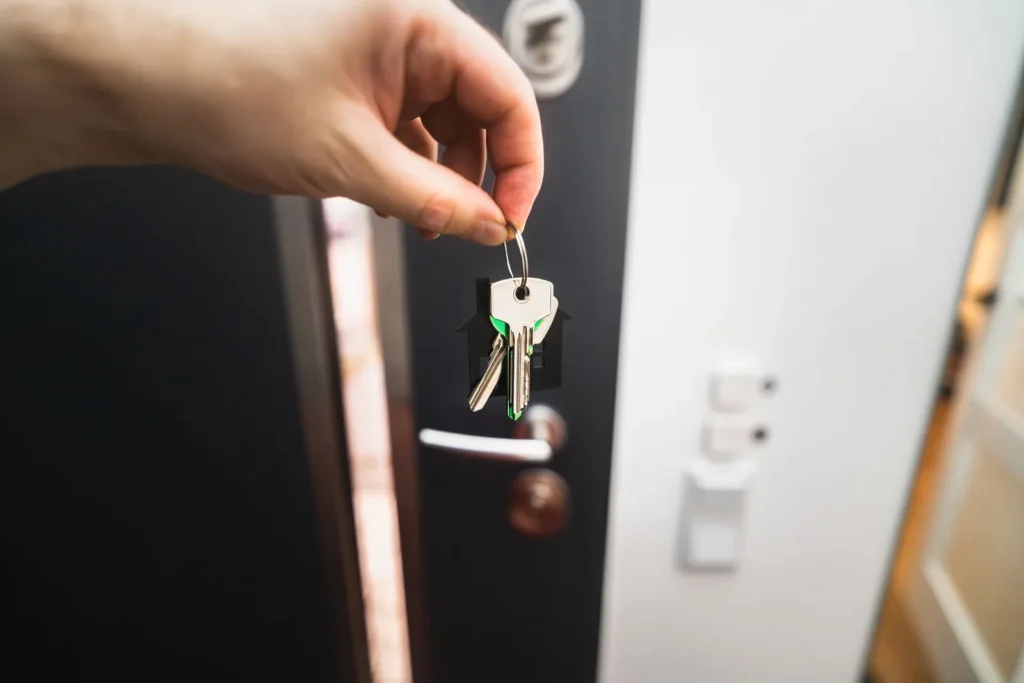
Photo: Generic home-access illustration; not a Saudi home, Pilgrim Taxi property or a particular family invitation. Photo by Jakub Zerdzicki / Pexels, under the Pexels licence.